Thursday, 23 July 2009

Japan mobile services break $14bn barrier, shrug off recession


According to the generally omniscient (about Japan mobile stuff anyway) site Wireless Watch Japan, the Japanese mobile services industry has broken through the $14bn market barrier in 2008, so with 106m mobile contracts, that's Average Market Revenue per mobile capita at $140-odd/yr. And we're talking mobile services here, not buying mobile phones and accessories. Only services!

It is interesting to see that the mobile services/commerce industry has expanded a full 55% over 2 years from 2006 to 2008 to capture 2/3 of the mobile software services industry market in Japan last year. The mobile content industry - once the cash cow of the mobile industry in Japan and still dominant in EMEA/NAm - only represents 1/3 of the total market now and only grew 30% over the same period. Alea jacta est... services/commerce are not going away anytime soon. They are now ready for prime time in the rest of the newly-awakening post-recessionist EU/NAm consumer markets. Watch this space.

Sunday, 19 April 2009

Rocket built from scratch makes it to space


I hadn't realised this had happened last September until today, but it brought tears to my eyes... The first privately built spacecraft, built from scratch, now nestling into an earth orbit within 9 minutes of launch. It's finally a reality. Finally, this kind of thing is happening. Cheaper payloads into space in the next couple of years thanks to this. Very very cool, very very inspiring. The next wave is upon us!! See the video below for more...

Thursday, 26 March 2009

If hairdressers charged like mobile operators


Having had a cut myself a couple of days ago, I found this piece absolutely hilarious... but true. See the article entitled "What if mobile phone operators ran hairdressing salons?" and learn!

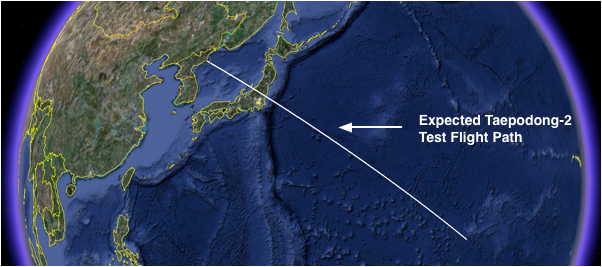
North Korean missile flies over Tokyo as Japan stands by


(click on picture to enlarge)

Shame on the Japanese leadership for failing to protect your nation. When missiles were sent over Northern Japan back in August 1998, no-one did anything. I watched from London, glued to the news feeds: when the missile sailed over mainland Japan, the Japanese Army and Navy did nothing. 11 years later, North Korea's missile will sail over Tokyo's 35 million inhabitants, and again Japanese leaders plan to do nothing but sweep up the debris.

In his daily interview today, the Japanese PM had nothing to say beyond "making sure we work together with the UN Security Council" (asahi.com). For any other country it would be as simple as, 'don't do it or we will take out the missiles and your missile capability, if not counter-attack with overwhelming force'. Imagine a missile blithely sailing over London and the South-East. Is that acceptable? In Japan, the answer is yes.

10 days ago, the response of the Japan Navy to this was "to shoot down a satellite that North Korea plans to launch early next month if it shows any signs of striking [our] territory" (see here), but today, mere days away from launch the response has toned down to insignificance "Officials in northern Japanese coastal cities today began setting up emergency networks and running drills to prepare for falling debris in case the launch fails" (Guardian). Hillary Clinton pontificates: "this provocative action [...] will not go unnoticed and there will be consequences" in case of launch. How different things would be if the launch was due over Washington DC.

Pages 143-144 in Yoichiro Sato's book Japan in a Dynamic Asia detail clearly what happened back in 1998: the attack took place in August 98, missile flew over Japan, Japan pulled out of the light-water nuclear reactor-cum-food aid program KEDO in political protest. Then they fell back in line before the end of 1998 (!) because of political pressure from the US for its new pre-North/South Korea reunification fever plans to bring peace to the peninsula... i.e. nothing happened. Japan complained that the US intelligence didn't give them the right information until after the missile had passed over the country, but that is hardly acceptable with such a modern Army and Navy. As a response, Japan launched their own spy satellite in 2003 so as not to rely on US intelligence.

The failure of Japanese leadership to protect their own people speaks volumes about the spine of the Japan defense agencies and their will to do the job they are paid to do. Shame on them if they let this through... again.

Tuesday, 17 March 2009

2009-2019: space tourism's lost decade


Regardless of the best efforts of Richard Branson and a handful of other space entrepreneurs, space tourism is shutting down, at least for the next decade.

The Russians are shutting down their space tourist program at the end of 2009, 8 years and 6 passengers after Dennis Tito their first paying passenger. At $20m a shot, it was rather expensive for the average Joe, but there you go.

In 2010, at the same time that Russia shuts down their tourist program, the US will not have any space-faring vehicle available as the Space Shuttle goes into retirement. The US hope to bring their new shuttle online in 2015, but there are no guarantees regardless of Obama's guarantees that all will be well on the space front.

The UAE and Singapore have announced their own spaceports, but check either websites, and the last updates date from 2006 and nothing since then.

China has started building its own space station(s), but have no plans for testing their first unmanned modules before 2011 - and astronauts would come later - whereas space tourism remains a vague notion in the future, ie. 10+ years into the future, if you know how the Chinese government manages its announcements on large projects. So nothing from the Chinese until 2019, even though their container-style space stations will probably be the way of the future.

So this is sizing up to be the lost decade for space tourism, although Virgin Galactic-like trips up into the atmosphere for $200k a pop and better materials/suits via nanotechnology research may improve the lot of future generations going up in the 2020s.

Saturday, 7 March 2009

Washington University searching for new AI paradigm


Washington professor searches for a new AI language beyond LISP: more here.